How Smart Is Your Team When It's All in One Room?
You hired really smart people. Then you started hearing at least three versions of every decision, saw conflict routed around people instead of with them, or watched your team file away their assessment results instead of working with you to design personal and team development plans. The Lab designs working sessions around your team's real decisions, so the intelligence you're already paying for starts compounding.
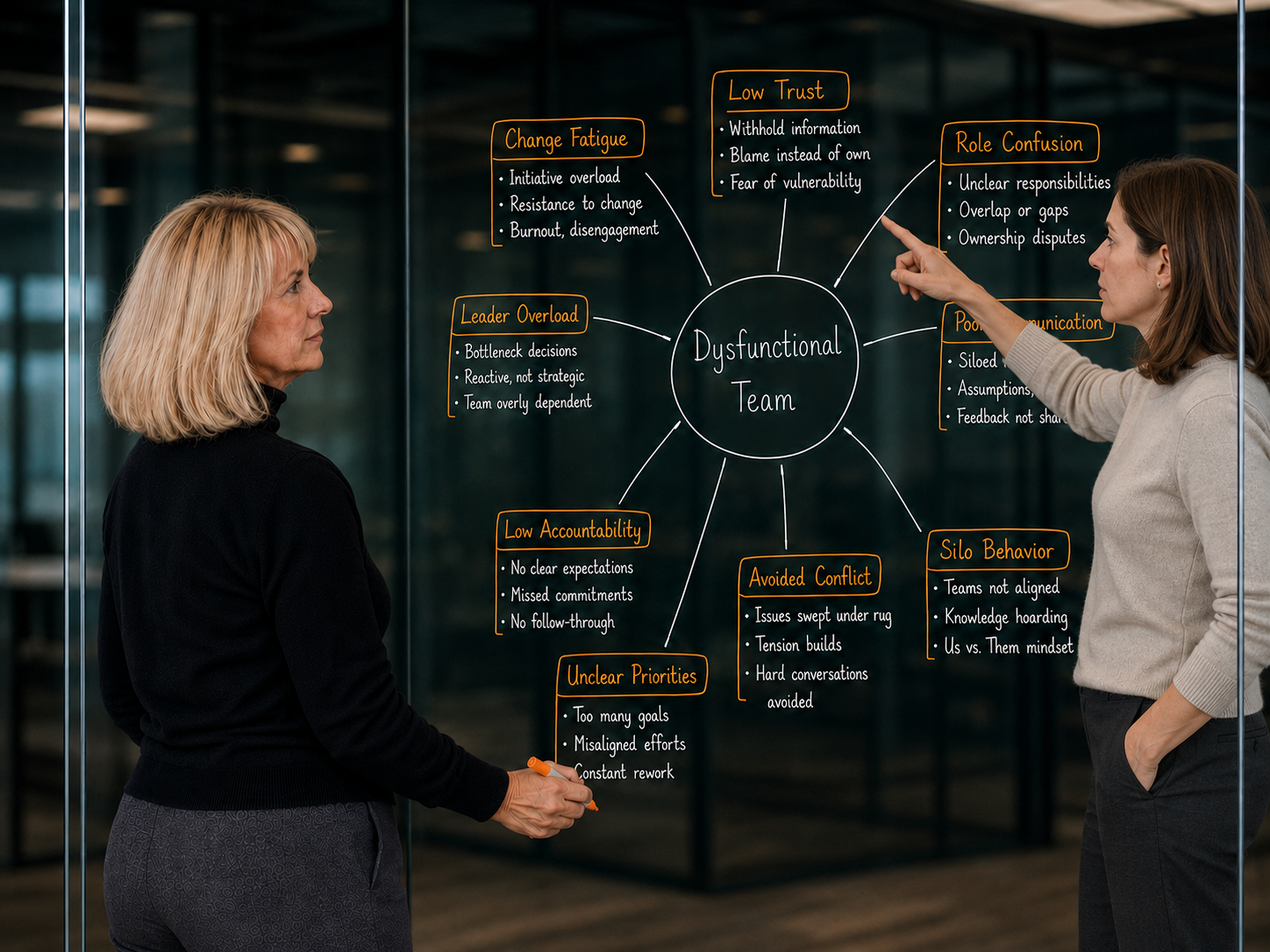
Functional on Paper, Fractured in Practice
- Your team keeps leaving the same meeting with three different versions of what was decided.
- Two of your strongest people misread each other so consistently that everyone else has learned to route around them.
- A reorganization stuck two cultures together and called it a team that no one has convened yet.
- You ran an assessment process last year, the PDFs are in a drawer, and the conversation it was supposed to start never happened.
- The real debate happens after the meeting in Slack channels and hallways, one whispered conversation at a time without guidance or planning.
- An organizational or technology shift has been dropped on your team. You're seeing resistance and realize that it is actually their fear of the unknown path for how they will move forward.

Designed Around Your Team, Never Off a Shelf
Every engagement starts with the same question: What does this team have to be able to do together in the next six months that it can't do today?
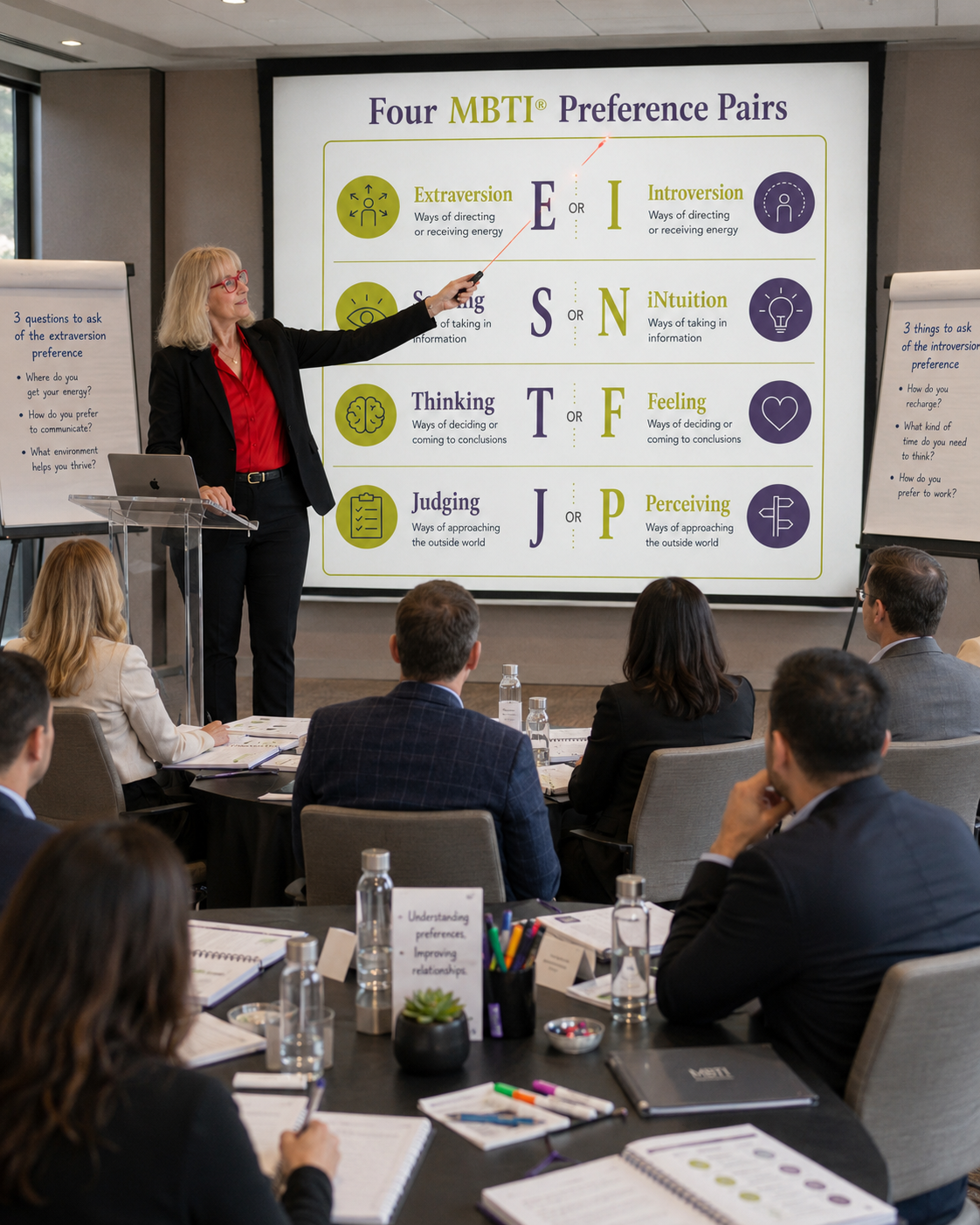
Group MBTI® and Assessment Debriefs
MBTI®, Hogan, and other instruments, debriefed the way they were meant to be: as the opening of a working conversation about how this specific team thinks, decides, and misreads itself. MBTI® programs aren't built on psychobabble. They're built on preferences and patterns that help individuals and teams make the small shifts that help them thrive. The instrument is the doorway, but the follow-up conversations and development planning are the point. Our proprietary Return on Investment tool provides you snapshots of progress on team member made commitments at 30-, 60-, and 90-days.
Bespoke Teaming Arcs
Multi-session programs built around your team's live work: decision rights, communication contracts, conflict norms, and the unspoken rules that actually run your meetings. By working on real processes and crafting better decisions, the changes that are designed while working together survive and see implementation.
New-Team Accelerators and Working Offsites
For the newly merged, newly promoted, or newly reorganized: a designed convening that compresses months of accidental discovery into days of deliberate work. People leave with agreements, never just warm feelings.

Everyone leaves the room with something written down: personal actions, decisions, owners, and dates, not just a warm feeling about the conversation.
The hardest part of any change isn't the actual required change. It's the fear underneath the slow adoption. Fear doesn't respond to information; it responds to evidence, and evidence lives in specific stories about specific people.
When the Lab Earns Its Keep

Misalignment has a direction. Left alone, an unexamined team doesn't stay neutral, it drifts toward the same friction points, quarter after quarter. The fit questions below are here so you bring the Lab in before that drift compounds.
Bring the Lab in when
- The team's decisions matter enough that misalignment has a visible cost, in rework, delay, or attrition.
- You're willing to be in the room as a participant, with your own patterns on the table.
- You want the work anchored to real decisions and real meetings, with agreements you can audit a quarter later.
- An instrument like MBTI® or Hogan is already in play, or should be, and deserves a debrief worthy of it.
Save your budget if
- You want a morale event. Ropes courses are cheaper and more fun, and they change nothing on Monday.
- The team's problem is one person's performance. That's a management conversation, and no workshop substitutes for it.
- Leadership wants the team fixed without being examined. The room reads that instantly.
The Team Is the Unit Nobody Develops
Organizations invest heavily in developing individual leaders and almost nothing in developing the senior team as a working unit. The research on what that costs is very clear.
Senior executives who rate their own executive team as very effective. In the same research, nearly all agreed that improving the team would improve organizational results.
Center for Creative LeadershipSenior managers who strongly agree the members of their executive team are comfortable disagreeing with each other. Only 17% strongly agree the team holds each other accountable.
Leadership IQ executive team health survey, 1,089 respondentsFortune 500 companies that use the MBTI® for people development, by the publisher's own count. The instrument is everywhere; the working debrief that turns a report into shared team language is the rare part.
The Myers-Briggs CompanyThe gap runs to the very top: in DDI's 2021 global research, about 60% of CEOs said they want external coaching and feedback, and only 23% said they received the high-quality feedback they needed. Gallup finds only three in 10 hybrid managers have had any formal training on leading hybrid teams.
If This Is Close, but Not Quite It



Ready for the Team Lab?
Your team looks functional on paper, but something isn't quite fully connected. The Lab works when the leader is ready to convene, not just curious, so these ten questions are for you, before you bring it to your team. Answer honestly; nobody scores this but you. A clear "not yet" is a passing grade.
A Team Problem, or a Leader Problem?
If the friction traces back to one seat — including yours — start with coaching; the Private Table is built for that. If it lives between the seats, that's the Lab.
Before the Conversation
If your score says go, finish these three sentences and bring them. The design starts from exactly these answers.
Misalignment has a direction. Left alone, a team drifts toward the same friction points, quarter after quarter — the point of convening is to get there before the drift compounds.
Tell me what your team can't do together yet.
The first conversation is a working session in miniature: your team, its live decisions, and what's actually in the way. You'll leave with a point of view, whether or not you hire the Lab.
Are you ready?